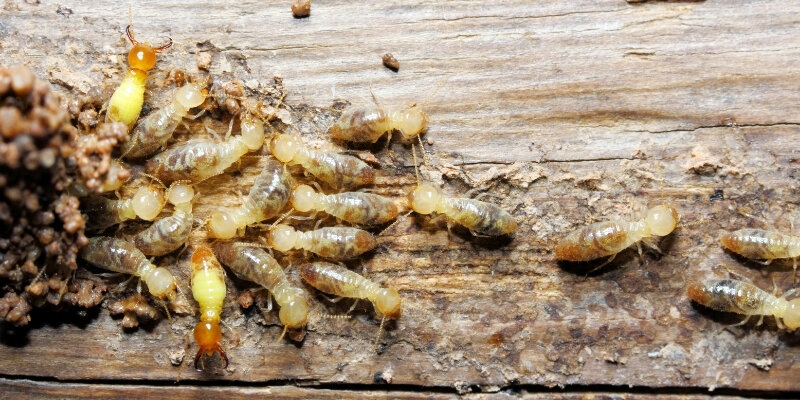
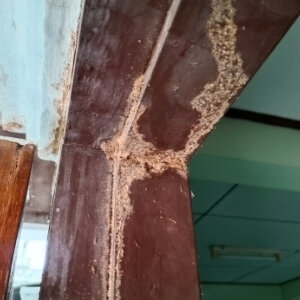
A pest inspector once handed a Medina homeowner a report thicker than a college textbook. Subterranean termites in the crawl space, mud tubes along three foundation walls, and old feeding damage in the floor joists. Convinced the property was worthless, the homeowner called me that same afternoon. It wasn’t worthless. We closed three weeks later.
This is the scenario playing out across Ohio more often than most real estate agents want to admit. Termites don’t automatically kill a sale. What kills a sale is not knowing your options.
Can You Sell a House with Termite History in Ohio?
Selling with termites in the picture is genuinely possible, and the Ohio market actually supports it right now. Home prices in Ohio hit a median of $278,000 in May 2026, up 4.8% compared to the prior year. Even with problem properties, sellers still have leverage because buyers are competing for limited inventory across the state (especially outside Columbus and Cleveland).
Ohio’s humid continental climate sustains active populations of Eastern subterranean termites statewide, and the USDA Forest Service rates Ohio’s risk of subterranean termite infestation as moderate to heavy. This isn’t a scare stat. It’s useful information for sellers because it means Ohio buyers and their inspectors already treat termite issues as routine here, not as a rare, alarming discovery.
Last summer, I worked with the Nguyen family in Fairlawn, just west of Akron. Their mother had recently moved into an assisted living facility, and the family needed to sell her ranch-style home so they could cover the ongoing care costs. Her garage was still full of her gardening equipment, and when the pest inspection came back showing subterranean termite activity along the back foundation wall, they panicked. We walked through the options together on a Wednesday afternoon, received a treatment quote by Friday, and they decided to sell to us as-is at Cleveland House Buyers rather than spend months managing repairs from a distance (coordinating contractors around their own work schedules gets old fast). There was no lender, no appraisal contingency, and no buyer backing out at the last minute, so the sale closed cleanly.
A home with a termite history doesn’t have to drag on the market. The key variable isn’t the infestation itself; it’s what you do next. Those who freeze, hoping the inspector won’t notice, are the sellers who end up with sales falling through in the eleventh hour. Sellers who get ahead of the information, gather documentation, and price accordingly move properties.
Apartments and apartment complex units can add a small hiccup. Selling an apartment involves disclosure duties that can be less clear-cut than those for a single-family home, especially around shared spaces and other units. Sharing known issues in common areas remains the safer option. If you own a condo with a termite history confined to your unit, talk to a real estate attorney before you assume anything, because condo ownership boundaries get murkier than most buyers and sellers expect.
The broader point: Ohio buyers are not walking away from termite-affected properties wholesale. They’re negotiating. And negotiation is a game you can play.
Do You Have to Disclose Termites When Selling Your House in Ohio?
Ohio Revised Code § 5302.30 governs this, and the answer is a firm yes. The Ohio-standardized disclosure form, maintained by the Ohio Department of Commerce, includes a dedicated section on wood-destroying insects, termites, and past pest infestations.
Sellers must disclose known current infestations, known prior infestations, whether treatment was performed, and known structural damage from pest activity. The obligation is tied to your actual knowledge (not what you remember hearing secondhand), not to what a professional pest inspection might uncover later.
Ohio disclosure law requires sellers to disclose only those material defects they actually know about, which means you aren’t required to conduct an independent inspection first; you list what you’ve learned and observed through living in and caring for the property. So if you genuinely didn’t know termites were present, you’re not legally exposed on that point. But if you had a pest control company out two years ago and know there was an active colony, that history goes on the form.
If the seller knows of termite damage, carpenter ants, or prior pest treatment, those facts need to be disclosed. Past treatment does not eliminate the need to disclose the history. Sellers treat the problem, assume it’s resolved, and then leave the disclosure blank. Legal trouble starts there.
Skipping the disclosure isn’t just an ethical issue; it’s a financial one. Failing to disclose known defects can lead to serious consequences. A buyer who discovers a problem after closing may claim the seller misrepresented the property’s condition or fraudulently concealed the issue. Post-closing lawsuit costs far exceed any upfront price concession.
Government-backed loan programs, including FHA, VA, and USDA loans, impose wood-destroying insect inspection requirements as a condition of loan approval on properties where such insects pose a material risk. So even if you’re tempted to stay quiet, the buyer’s lender will likely order a Wood-Destroying Insect report anyway. The truth surfaces during the mortgage lending process, whether you disclose it or not.
Disclose everything you know and get it all on paper, collecting your treatment records and receipts. That stack of documentation actually helps you more than it hurts you.
Your Options When Selling a House with Termite Damage in Ohio
A seller who sinks $12,000 into pre-market repairs sometimes walks away with less than a neighbor who lists as-is and lets buyers compete. Repairing termite damage before listing isn’t always the smartest financial move, and sellers who spend heavily on pre-market remediation often don’t recoup their costs.
You have three real paths. Each one fits a different situation.
Treat, repair, and list on the MLS. Hire a licensed pest management company, eliminate the active colony, repair any structural wood damage, obtain a warranty, and list the property at full market value. This works best when the damage is contained, you have time, and your finances can absorb the upfront cost. Real estate agents and Realtors® can help you market the property with the warranty front and center, giving buyers something concrete to point to during their financing conversations. Buyers using conventional financing will find this path smoothest, since most lenders want a clean pest inspection or proof of treatment before funding the loan.
Disclose and sell as-is, with a price adjustment. Put everything on the disclosure form, price the home to reflect the condition, and let the market respond. Buyers who aren’t using FHA loans or VA loans have more flexibility here. Many investors and flippers actively search for properties in exactly this situation.
Sell directly to a cash buyer. No lender, no appraisal, no pest inspection contingency, no waiting for a buyer to get cold feet after the inspection report comes back. Cash house buyers in Cleveland, OH buy properties in their current condition, and Cleveland House Buyers buys homes across Northeast Ohio regardless of pest history, structural condition, or the amount of deferred maintenance involved. The trade-off is that cash offers are typically below what a fully repaired home would fetch on the open market, but factor in treatment costs, repair costs, carrying costs, and real estate agent commissions (which add up faster than sellers expect), and the gap narrows considerably.
One pattern I keep seeing with sellers who choose the MLS route: they underestimate how skittish buyers get when they read a pest inspection report, even when treatment has already been done. Financing falls through, buyers renegotiate, sales collapse. Pricing the home correctly from day one, with full transparency, saves everyone time.
Termite Treatment Options and Warranties That Reassure Buyers
Many buyers assume a termite warranty means the problem is gone. Where that expectation breaks down is in the fine print of what the warranty actually covers and for how long.
Ohio sellers have several pest control options. Liquid soil treatments use termiticides injected around the foundation perimeter to create a chemical barrier. These are the most common methods used against Eastern Subterranean Termites, which build mud tubes through the soil to reach wood. Bait station systems are installed around the property and monitored periodically. They work over a longer timeline but can be effective for ongoing prevention, which is worth considering if the infestation was caught early.
Tent fumigation is the option that catches sellers off guard on cost and logistics. Fumigate a whole house, and you’re looking at the property being tented and inaccessible for multiple days. Fumigation targets drywood termite colonies that have spread through finished wood, and drywood termites aren’t established in Ohio’s climate. They only turn up here in imported furniture or lumber, so the vast majority of cases here involve the subterranean variety instead. Most sellers in areas like Parma, Strongsville, and Mentor never need full fumigation because liquid barrier treatments handle the problem.
A transferable termite bond or warranty is one of the most valuable documents you can hand a buyer. It tells them a licensed pest management company is on the hook for retreatment if the colony reappears. Ask the pest control company whether their warranty is transferable to a new owner and for how long. Some run for one year; others extend to five years with annual inspections. Sellers who have a clear answer ready will avoid back-and-forth during negotiations with buyers and their real estate agents, which can slow the closing process.
For homes selling to buyers with FHA loans, the lender’s underwriter will often require a clean Wood-Destroying Insect report before funding the mortgage. A treatment warranty doesn’t automatically satisfy that requirement; the property may still need a reinspection confirming that no active infestation exists before the bank releases the funds. Build that extra step into your timeline.
Cost Breakdown: Termite Remediation vs Price Concessions

I used to assume that treating and repairing before listing was almost always the better financial move. The math doesn’t usually support that.
Liquid soil treatment for a typical Ohio ranch or two-story runs somewhere between $500 and $1,500, depending on the size of the structure and the extent of the infestation. Structural wood repair is where costs climb. Replacing damaged sill plates, floor joists, or subfloor sections in an older home in neighborhoods like Tremont or Old Brooklyn can cost anywhere from $3,000 to $15,000 or more, depending on the extent of the damage. In the rare Ohio case involving drywood termites in interior framing or roof sheathing, repair bills climb even higher.
A price concession at the negotiating table, by comparison, often ends up cheaper. If buyers are looking at a $220,000 home with a $4,000 termite repair estimate, they might ask for a $6,000 reduction. That stings, but you’re also not managing contractors, waiting on permits, or delaying your closing date by six weeks. Time has a cost, too, especially when you’re still paying property taxes, utilities, and homeowners’ insurance on a house you’re trying to leave while carrying your next mortgage.
Across Ohio, home sales volume rose 2.9% year-over-year in May 2026, with 12,278 homes sold that month. A healthy sales volume means there are buyers out there willing to move on properties that need work, especially if the seller has done the disclosure work honestly and the price reflects reality.
Sellers who treat and repair but then overprice the home end up with the worst outcome: they’ve spent money on remediation and then left the home on the market long enough that buyers start wondering what else is wrong. Setting the price right the first time avoids that trap.
How to Price a Home with Termite History in Ohio
A seller approached me about a 1960s colonial in Berea, southwest of Cleveland, near the Rocky River Reservation. She’d already gotten a treatment done and had the paperwork, but two different agents had given her list-price recommendations identical to what the neighbor’s clean home sold for. Both agents were wrong. Sellers in that part of the county often start by asking what cash home buyers in Berea would pay before they settle on a listing price.
Condition factors into offers from Ohio buyers, whether the listing price reflects it or not. A home with disclosed termite history, even after treatment, will attract lower offers, longer inspection periods, and more contingencies on the open market. That’s not opinion; that’s what I watch happen again and again.
Pricing correctly means starting with comparable sales in your immediate area, then adjusting down to account for the termite history disclosure, the remaining repair work, and the likelihood that some buyer pool segments (particularly those using FHA loans or VA loans) may not be able to buy regardless of treatment. In Shaker Heights or Westlake, where the buyer pool skews toward conventional financing and cash buyers, a smaller adjustment may be necessary. In markets with more first-time buyers using government-backed loans, you’ll need to make further adjustments, as those loan programs can disqualify a property with open repair items.
Ask any honest Realtor to pull closed sales of properties with disclosed pest issues in your zip code over the last 12 months. That data exists. Comparing those sale prices to similar clean properties gives you a real number rather than a guess. The appraisal will reflect market reality, regardless of the list price, so it’s better to set the price where buyers and their lenders will actually get to closing.
Do buyers actually walk after seeing a termite disclosure? Some do. The ones who stay tend to be more motivated and serious, which often leads to smoother negotiations.
What Ohio Buyers Actually Want to See After Termite Damage
A completed pest inspection report from a licensed inspector is the minimum; what buyers actually want is a paper trail showing when the infestation was found, what treatment was used, who performed it, and what ongoing monitoring is in place.
Buyers and their agents will request documentation of everything, including the original pest inspection report, the treatment invoice, the warranty certificate, and any reinspection reports confirming the colony is gone. If structural repairs were made, they’ll want photos of the work, the contractor’s invoice, and ideally a structural engineer’s sign-off if the damage was extensive. Keep every receipt.
For the buyer’s lender, particularly a bank or mortgage lender processing a government-backed loan, the Wood-Destroying Insect report must show no evidence of an active infestation. This report gets ordered by the buyer or their lender, not by the seller, but the seller’s treatment records will feed directly into what that report shows (and gaps in those records raise flags). The Ohio Department of Agriculture licenses the pest control operators who issue these WDI reports, so there’s a chain of accountability buyers can verify.
Structural damage is what makes buyers most nervous, more than the active pest issue itself. Showing buyers photos of repaired joists or a contractor report confirming no load-bearing members were compromised goes further than anything else. The insect is gone; the question is whether the house is structurally sound, and documentation (a full contractor report, not just a summary) is the only thing that answers it.
Rachel Sutton had a split-level in Brunswick with solid bones and a disclosed termite history, but she’d watched two consecutive agent listings expire without a single accepted offer. Her paperwork was incomplete; there was a treatment record but no follow-up inspection confirming success, and no documentation of the minor joist repair a local contractor had done. When she reached out to Cleveland House Buyers, we could evaluate the property based on what we could see and assess ourselves rather than waiting on third-party documentation that kept stalling the conventional sale (missing paperwork kills more transactions than the damage itself). She had a signed contract by the end of that week. Owners looking for cash home buyers in Brunswick usually want the same thing she did. A straight answer without a repair list attached.
How to Market a House with Termite History to Ohio Buyers

If you’re sitting across from me at your kitchen table, here’s what I’d say: trying to bury the termite history in footnotes on your listing will cost you more than just leading with it.
Ohio buyers who are actively searching for investment properties, fixer-uppers, and value-add sales are already filtering for disclosures. Your listing’s transparency becomes a selling point to that segment of the market. Obscuring the information drives away serious buyers and keeps the anxious ones who will kill the sale at inspection, leaving you to start over with a weaker buyer pool.
Your listing description should be factual and matter-of-fact. Mention the treatment, the warranty, and the availability of documentation. Photographs of the treated areas and repaired sections signal to buyers that the issue was handled professionally rather than ignored. Real estate agents who specialize in distressed or as-is sales in the greater Cleveland area, Akron, or Canton know how to frame this honestly without making it the headline of every paragraph.
Ohio homes were sitting on the market a median of 43 days in May 2026, and a problem property priced correctly tends to move faster than one priced aspirationally with a clean inspection. Marketing a home with termite history to cash buyers and investors requires a different channel than a standard MLS listing aimed at first-time homebuyers. Reach out directly to local investment groups, cash buyer networks, and a company that buys houses in Ohio, like Cleveland House Buyers, experienced in evaluating properties with pest histories without flinching at the disclosure form, because investors who buy these regularly already know what remediation actually costs.
Buyers of units in an apartment complex will want clarity on whether the termite issue was isolated to the unit or involved shared structural areas, creating some additional marketing considerations. Be ready to answer that specifically.
The sellers who make the most on a termite-affected property are the ones who treat it like a logistics problem, not an emotional crisis. Get the documentation, price it honestly, find the right buyer segment, and move forward.
Frequently Asked Questions
Is It Hard to Sell a House That Has Had Termites?
It’s more involved than a standard sale, but far from impossible. The main hurdle is financing: buyers using FHA or VA loans will face lender requirements for a clean pest inspection, which narrows your buyer pool but doesn’t eliminate it. Price the property to reflect its condition, keep your treatment records handy, and most of the friction disappears.
Are Termites a Deal Breaker When Buying a House?
For some buyers, yes, especially those with a limited appetite for risk or those relying on government-backed loans that require a mandatory pest inspection. For cash buyers, investors, and buyers experienced with older Ohio homes, a disclosed termite history with documentation of treatment is usually a negotiation point rather than a reason to walk.
Is Your House Ruined If You Have Termites?
Not in most cases. The level of damage varies widely depending on how long the colony was active and which parts of the structure it affected. A surface-level infestation caught early causes minimal structural harm. A colony that’s been active in load-bearing members for years is a different situation, and that’s where a structural engineer’s assessment becomes worth every dollar.
Do Termites Decrease Home Value?
Termites affect value in two ways: the cost of treatment and repair, and the perceived risk for buyers. Active damage or an undocumented history can reduce a home’s market value by several thousand dollars or more. A well-documented, treated property with a transferable warranty tends to see a much smaller impact, since buyers can quantify the risk and the seller has already removed most of it.
If you’re sitting on a property with a termite history and aren’t sure which direction makes the most sense for your situation, we’re happy to talk it through. No obligation, no pressure. You can contact us at Cleveland House Buyers or call (440) 577-6552, and we’ll give you a straight answer about your options.
Helpful Ohio Blog Articles
- How to Sell an Apartment in Ohio
- How to Avoid Closing Costs in Ohio
- Can My Ex-Partner Sell Our House Without My Approval in Ohio?
- Do All Heirs Have to Agree to Sell Property in Ohio?
- How to Sell a Condemned House in Ohio
- Does a Seller Pay Closing Costs in Ohio?
- Selling a House with Delinquent Property Taxes in Ohio
- How to Sell a Rental Property in Ohio
- Selling a House That Needs Repairs in Ohio
- How To Sell Your Ohio House With Foundation Problems Fast
- How To Sell Your House During Foreclosure In Ohio Before Auction
- Appraisal Required Repairs in Ohio
- Selling a House With Unpermitted Work in Ohio
- Paperwork for Selling a House by Owner in Ohio
- FHA Required Repairs in Ohio
- Selling A House That Failed Inspection In Ohio
- How Medicaid Tracks Home Sales