
About 813,000 American borrowers owe more on their home loan than the house would bring on the open market. That’s a 44% jump in a single year, according to the August 2026 ICE Mortgage Monitor. Most homeowners sit nowhere near that line, though the worry still comes up at nearly every kitchen table I sit down at. People believe a mortgage bolts the front door shut until the last payment clears.
It doesn’t. Selling before paying off the mortgage happens every day. Your loan is a lien against the property, not a leash on you.
Can You Sell a House with a Mortgage Still on It?
“Do I need the bank’s permission first?” Nope. You don’t call your lender for approval or fill out a request form. Nobody at the servicing company gets a vote on your listing price, either.
What your lender holds is a recorded claim against the title. When the sale closes, that claim gets paid from the proceeds before a dollar reaches you. The title company or closing attorney runs the whole thing. They ask your servicer for a written payoff figure, wire the money on closing day, and the lender records a release so the next owner gets clean title.
Plenty of owners have the equity to make this painless. Mortgage holders crossed $18 trillion in home equity during the second quarter of 2026. Roughly 47.5 million of them averaged about $212,000 in tappable value each. Cleveland is more modest and more affordable. Homes there sold for a median of about $150,000 over the three months ending August 2026, up 11% year over year, after a median of about 32 days on the market.
So permission isn’t the question. Arithmetic is. Take what the property would likely sell for, subtract the loan balance and closing costs, and whatever’s left goes home with you. A lot of sellers I meet have more cushion than they guessed. They’ve been anchored to their original purchase price instead of today’s market value.
If you want to avoid the listing process, Cleveland House Buyers can make you a cash offer for the house. We’ll factor in the mortgage payoff and give you a straightforward offer so you can see what you’d actually walk away with, with no obligation.
What Happens to the Mortgage When You Sell Your House?
Ask your servicer for the payoff figure late, and your closing can slide by a full week, because servicers don’t rush. I’ve watched that one delay cost sellers moving trucks and deposits. A few times it cost them the house they were buying on the other end.
A payoff statement isn’t the balance on your monthly bill. It adds the interest that builds up through a specific good-through date, plus any recording or release fees. It also lists a daily interest amount for each day past that date. Close three days late and the wire has to grow to match.
Your escrow account settles separately from the sale. If the servicer has been collecting for property taxes and insurance, whatever’s left after payoff comes back to you. The servicer has 20 business days to send that refund, and it usually arrives as a check. People forget about it, then wonder why a stray envelope shows up a month later.
Prepayment penalties are rare these days, since federal rules allow them only on a narrow slice of fixed-rate qualified mortgages. Where one applies, it can’t top 2% of the prepaid balance in the first two years. The cap drops to 1% in year three and disappears after that. Your Loan Estimate and Closing Disclosure both carry a line labeled “Prepayment Penalty.” Check that line before you assume you owe one.
One more piece: your lender’s lien release has to be recorded with the county. The title company usually tracks it, but confirm it actually happened.
If you’re considering selling, contact us for a cash offer and see what you could walk away with after paying off your mortgage. There’s no obligation, and you can compare the offer with your other options.
How to Sell a House with a Mortgage Step-by-Step

On paper, the sequence looks clean: find a buyer, sign, collect a check. Then the title search turns up a second lien from a 2019 roof loan nobody remembered. Sometimes it’s a mechanic’s lien from a contractor who never got paid in full, or an old judgment stuck to the property.
Start by requesting your payoff statement in writing. Federal rules give your servicer no more than seven business days to send it. Price comes next. Pull three or four recent nearby closed sales, not active listings, and be ruthless about condition. A home appraisal or professional valuation costs a few hundred dollars and settles arguments fast. For the Ohio side of it, see our guide to selling a house with a mortgage in Ohio.
Once an offer comes in, the contract sets the clock. Buyers usually order an inspection within the first week or two, and then their lender orders its own appraisal. If that number lands under the contract price, the bank won’t finance the gap, and somebody has to give. Usually that means you drop the price, the other side brings extra cash, or the two of you meet somewhere in the middle.
Title work runs alongside all of this, as the title company traces the chain of ownership and flags every lien. It also builds the settlement statement showing what pays off and what’s left for you.
Closing day is mechanical by comparison. You sign, funds wire, your mortgage debt is satisfied, and the deed goes to the buyer. Keep making mortgage payments the entire time. Skipping one because you’re “about to sell anyway” dings your credit and can trigger collection activity from the lender that muddies the payoff.
What Are Your Options When Selling a House with a Mortgage?
A seller calls me with a 1950s cape, three estimates for a new kitchen, and a plan to list in the spring. Six weeks later, the contractor’s timeline has doubled, and spring is gone.
Not long ago, a family in Parma hit exactly that wall. Their contractor priced a kitchen rebuild that would cost more than it could ever add to the house. It was a solid property, and the garage still had its original workbench bolted to the wall. We bought it with the avocado countertops intact (they had character), and the family put the money toward a condo.
You’ve basically got four paths. List with a real estate agent and sell at retail, which pays best when the house shows well. Rent it out and keep the loan, which only works if you want a second job. If you’re underwater, a short sale is possible when the lender agrees to take less than the full debt. The fourth path is selling direct to a cash buyer like us, including investor house buyers in Parma and the surrounding Ohio cities, where you skip repairs and showings and choose your closing date.
Owner financing and loan assumption come up now and then too. Most conventional mortgages carry a due-on-sale clause, which rules out the first and blocks the second. Some FHA and VA loans are assumable, though the lender has to approve the new borrower. Get your lender to confirm in writing whether yours qualifies before you promise a buyer anything. If a buyer has already floated the idea, here’s how it works when someone takes over your mortgage in Ohio.
Pick based on your real constraint. A tight timeline and a tired house rarely point the same direction as top dollar. Write down your hard deadline and the lowest number you’d take, and the right path usually gets a lot clearer.
What Happens When Sale Proceeds Don’t Cover Your Mortgage?

I used to tell sellers a short sale always beat foreclosure. That’s too simple. When the price falls short of what you owe, you’ve got three moves. You can bring cash to closing and cover the gap, ask the lender to approve a short sale, or keep the house and work out a loan modification.
Short sales need the lender to sign off on the price, the buyer, and the whole settlement statement, which is why they take months instead of weeks. Some lenders release you from the remaining balance. Others keep the right to chase a deficiency, and you want that difference in writing before you sign. Paying a real estate attorney to read the approval letter is money well spent. In my experience, that one review has saved more than it cost.
Delinquency numbers matter here too. The national mortgage delinquency rate was 3.55% in June 2026, still below the June 2019 pre-pandemic mark of 4.16%. Active foreclosures were another story, climbing to 0.53% of loans, the highest share in six years. Foreclosure still costs a lender time and legal fees. Many servicers would rather sign off on a workable plan than take a house back.
Calling early is the whole ballgame. Owners who contact their servicer at the first missed payment have options. Those who wait until a sheriff’s sale date is set have almost none. When you call, ask which hardship programs they offer and write down the name of everyone you talk to.
Near break-even? A direct sale sometimes clears the debt where a listed sale wouldn’t, because there are no commissions and no months of carrying costs. Set a cash offer beside a listing estimate on paper, and you’ll see which route leaves more in your pocket.
Key Tips for Selling a Mortgaged House Fast
Price beats presentation every time. You can stage a house beautifully and still sit for ninety days if the number’s wrong. Trim a few thousand and the same house might get three showings in a weekend.
Get your payoff figure before you list. Knowing your floor changes how you negotiate, and it keeps you from accepting an offer that has you writing a check at closing.
Don’t renovate for the market. Fresh paint and a cleaned-out basement pay back. New quartz countertops in a neighborhood of laminate rarely do, and I’ve watched sellers sink thousands into upgrades that barely moved the sale price. Keep your homeowners insurance active until closing, when the deed transfers. A lapse between contract and closing can stall the buyer’s funding.
Gather documents early. That means the deed, your latest mortgage statement, the survey if you have one, and permits for any work you did. The buyer’s lender will ask for all of it sooner or later.
Screen the buyer along with the offer. A high number backed by shaky financing is worth less than a lower one with proof of funds. Ask any cash house buyers in Mentor and other Ohio cities directly whether they’re closing themselves or assigning the contract to someone else.
Under Contract Versus Closing: What’s the Real Difference?
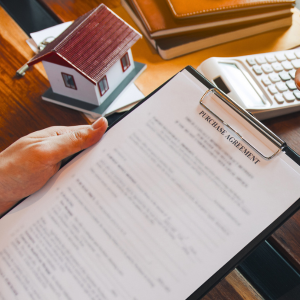
Signing a purchase contract doesn’t put money in your pocket. Any agent who treats the signature as the finish line hasn’t sat through enough failed closings.
Going under contract means you and the buyer agreed on terms. Price, closing date, contingencies, and what stays with the house. From there, the sale lives or dies on conditions like inspection results, the buyer’s loan approval, the appraisal, and clean title. Each one gives the buyer a way out if something goes wrong.
Closing is the transfer itself. Documents get signed and the buyer’s funds wire in. Your lender gets paid, the deed is recorded with the county, and the keys change hands. Only then is the mortgage satisfied. Until that moment, the house is still yours, along with its taxes, insurance, and upkeep.
The weeks between those two events are where sales break. Buyers lose jobs. Appraisals come in low. Title turns up an heir nobody knew about. A cash sale takes the loan and the lender’s appraisal off that list, though title still has to clear before closing. That’s one reason some owners decide to sell their house fast for cash in Ohio instead of waiting on a lender.
A woman in Mentor called me last winter while settling her father’s estate. She’d been driving out every other Saturday to collect rent from a tenant who paid late, if at all. She and her brother had never wanted to be landlords. The property had a detached garage packed with her dad’s fishing gear, and mostly she wanted to stop thinking about that garage. We closed without her ever listing it. The mortgage got paid, the estate got its proceeds, and nobody drove to Mentor again.
Frequently Asked Questions
What’s the Smartest Way to Pay Off a Mortgage Early?
Extra principal payments are the quiet winner. Every dollar beyond the scheduled amount cuts the interest you’ll owe over the rest of the loan. Biweekly payments do something similar by sneaking in one extra monthly payment each year. Selling outright pays the loan off at once, which makes sense when the house no longer fits your life or your budget.
What Should You Avoid Doing Right Before Selling?
Don’t open new credit lines or finance a car, since that can tangle the loan on your next home. Skip any major renovation you won’t recoup, and keep up maintenance while you wait for offers. Also avoid overpricing to “leave room for negotiation.” A stale listing draws lowball attention, and your final sale price pays for it.
Will I Owe Taxes If I Sell My House to Pay Off the Mortgage?
Often not. The federal exclusion lets many sellers keep up to $250,000 of gain tax-free, or $500,000 for a married couple filing jointly. You generally need to have owned and lived in the home for two of the last five years. Inherited property gets a stepped-up basis, which frequently wipes out the gain. Rentals are a separate conversation, with depreciation recapture in the mix. None of this is tax advice, and a CPA who sees your actual numbers is worth the hour.
Can I Sell If I Still Owe More Than the House Is Worth?
Yes, though you’ll need to settle the math before closing. You can bring cash to cover the shortfall, or ask your lender to approve a short sale, which takes longer and requires proof of hardship. Most homeowners who think they’re underwater aren’t, once they see a current valuation instead of a number from years back. If you’d like a second look at yours, we’re glad to run the figures with you whenever you’re ready.
If you’re weighing whether to keep paying or to be done with it, it costs nothing to see what a direct sale to Cleveland House Buyers would actually net you. I’ll look at the property, the payoff, and the timeline, and tell you straight if listing it would serve you better. No pressure either way, and no hard feelings if you decide to stay put.
Helpful Ohio Blog Articles